In order to minimise risks of spreading the coronavirus, and with short term staffing problems in the NHS caused by some staff needing to self-isolate, we regret to inform you that we may not be able to carry out routine radiation safety testing of our customers' x-ray equipment within the normal testing period. We will endeavour to arrange to undertake testing again as soon as possible but in the meantime

A joint publication has been issued by the British Institute of Radiology, the Institute of Physics and Engineering in Medicine, Public Health England, the Royal College of Radiologist and the Society & College of Radiographers. "Guidance on using shielding on patients for diagnostic radiology applications", BIR/IPEM/PHE/RCR/SCoR/SRP, 2020 is a thorough review of modern practice and evidence. It states that, "Overall, the findings suggest that contact shielding (e.g. thyroid shields, lead rubber aprons, gonad shields, breast shields on patients) provides minimal or no benefit and professionals should concentrate on other areas of radiation protection which are more effective in optimising the patient radiation exposure."
The only exception in the report is for some models of dental CBCT with large field of view (FOV) where there may be some benefit to the patient. In which case it is recommended that a medical physics expert (MPE) is consulted. The report states that there is, "Insufficient evidence for small field of view but effectiveness of a thyroid shield is likely to be low due to the exclusion of the thyroid from the primary beam and the reduction in secondary radiation from tighter collimation. The use of a thyroid collar may lead to artefacts in the images. An MPE should be consulted where the use of a thyroid collar is to be considered, such as units with a large FOV."

A new system of setting National DRLs for diagnostic radiology procedures has been launched with new values replacing those set by the Department of Health over a decade ago.
"The NDRLs will be regularly reviewed and updated by Public Health England (PHE), in collaboration with a working party on national dose surveys and DRLs with representation from PHE, the radiology professional bodies and the Department of Health. Data for future NDRLs will be considered from national dose surveys undertaken by PHE and from other appropriate studies."
For further details, and the latest NDRL values, please visit the PHE website.
Diagnostic Reference Levels are defined in UK legislation (IRMER) as "dose levels in medical radiodiagnostic practices or, in the case of radioactive medicinal products, levels of activity, for typical examinations for groups of standard-sized patients or standard phantoms for broadly defined types of equipment", and from 2018 will also include "interventional radiology practices". They are not intended to be compared with doses to individual patients, but to the average dose to a sample of patients (e.g. 20 patients undergoing a particular examination using a particular X-ray set).

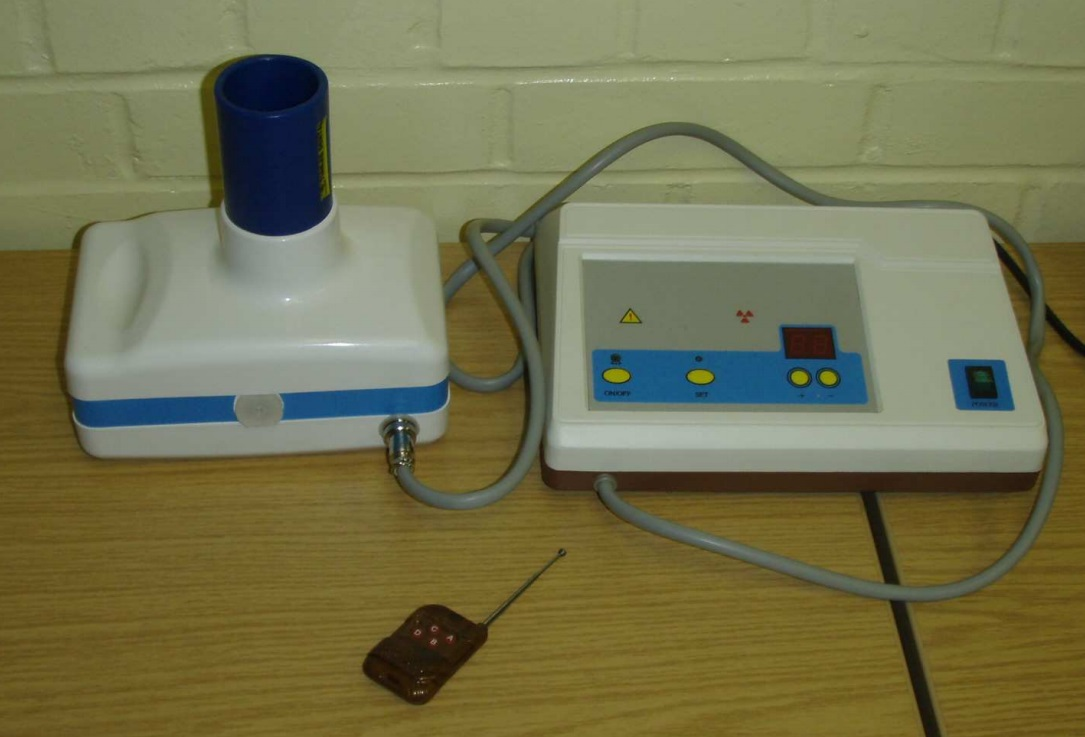
The UK’s Health Protection Agency has issued a warning concerning the Tianjie Dental ‘Falcon’ hand held X-ray set imported from China. This device is not CE marked and could lead to large radiation doses to staff and patients. Click for full report.

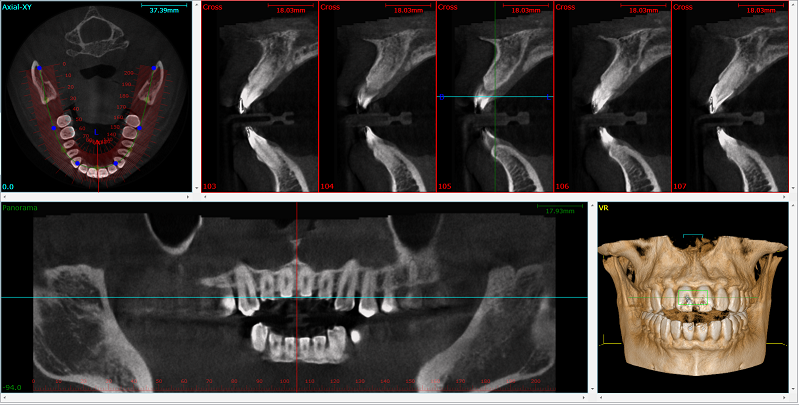
Cone Beam CT (CBCT) is a relatively new technique, not covered by the NRPB’s 2001 Guidance Notes. In some cases, CBCT can lead to considerably larger radiation doses to staff and patients if used without proper precautions.
The UK’s Health Protection Agency has issued free guidance on the safe use of dental CBCT, available to download from www.hpa.org.uk.

We are pleased to announce that Dr Tim Wood has been awarded the RPA2000 Certificate of Competence to be a Radiation Protection Adviser. Such a certificate from a body authorised by the HSE is required by any person acting as a Radiation Protection Adviser under the Ionising Radiations Regulations 1999. There regulations require an employer to consult a certificated RPA on;
Tim joins our other certificated RPAs, John Saunderson and Craig Moore. Tim has also been appointed, alongside John and Craig, as a Medical Physics Expert (MPE) under the Ionising Radiation (Medical Exposure) Regulations 2000 (IRMER) for radiological imaging.
Go to the CONTACT US page to find out more, and to get in touch.
28 June, 2010. A news article from the Health & Safety Executive about their concerns with regards to poor compliance of dental practices and chiropractors with the Ionising Radiations Regulations 1999.
An article on the HSE concerns about radiation safety in dental practices, as reported in the online journal, Cosmetic Dentistry Guide.
ADDRESS
Radiation Physics Department
Queen's Centre
Castle Hill Hospital
Cottingham
East Yorkshire
HU16 5JQ
U.K.
what3words - port.dating.select
Google Plus Code - QHH3+VJG Cottingham